THE INFRASTRUCTURE IMPERATIVE: HOW SPACEX’S MASSIVE COMPUTING DEALS RESHAPE THE AI COMPETITIVE LANDSCAPE

Comprehensive Analysis of Colossus Commercialization, Computing Power as Strategic Asset, and the Emergence of Infrastructure Providers as Dominant Forces in Artificial Intelligence Development
The agreement announced on June 22, 2026, between SpaceX and Reflection AI represented far more than a straightforward commercial transaction between two technology companies. The computing power deal, valued at up to $6.3 billion over its full three-year term, crystallized a fundamental transformation in how artificial intelligence development and deployment occurs at the global level. The contract stipulated that Reflection AI would pay SpaceX $150 million monthly beginning July 1, 2026, continuing through 2029 in exchange for access to Nvidia’s most advanced GB300 semiconductor chips housed within SpaceX’s Colossus data center infrastructure. For Reflection AI, the arrangement provided access to the computational capacity essential for developing and operating frontier-grade artificial intelligence models. For SpaceX, the agreement represented the latest manifestation of a strategic pivot toward commercializing the extraordinary data center infrastructure that the company had originally developed for internal operations. The combined significance of these dynamics illuminates how artificial intelligence development has become fundamentally constrained by physical infrastructure and computational capacity rather than by algorithmic innovation or software engineering alone.
The broader context in which the SpaceX-Reflection transaction occurred revealed a market characterized by acute scarcity of advanced computing capacity. Access to the most sophisticated semiconductor chips, particularly Nvidia’s latest generation GB300 processors designed specifically for artificial intelligence applications, had become one of the primary limiting factors determining which organizations could develop and deploy advanced artificial intelligence systems. The physical infrastructure required to house, power, cool, and network thousands or tens of thousands of advanced semiconductor chips represented an extraordinary capital undertaking. The energy requirements alone were staggering, with the most advanced data centers requiring hundreds of megawatts of sustained power generation. The practical consequence was that only organizations with access to exceptional capital resources could construct the physical infrastructure necessary for frontier artificial intelligence development. This scarcity of infrastructure had transformed computing capacity into a form of strategic currency within the artificial intelligence ecosystem.
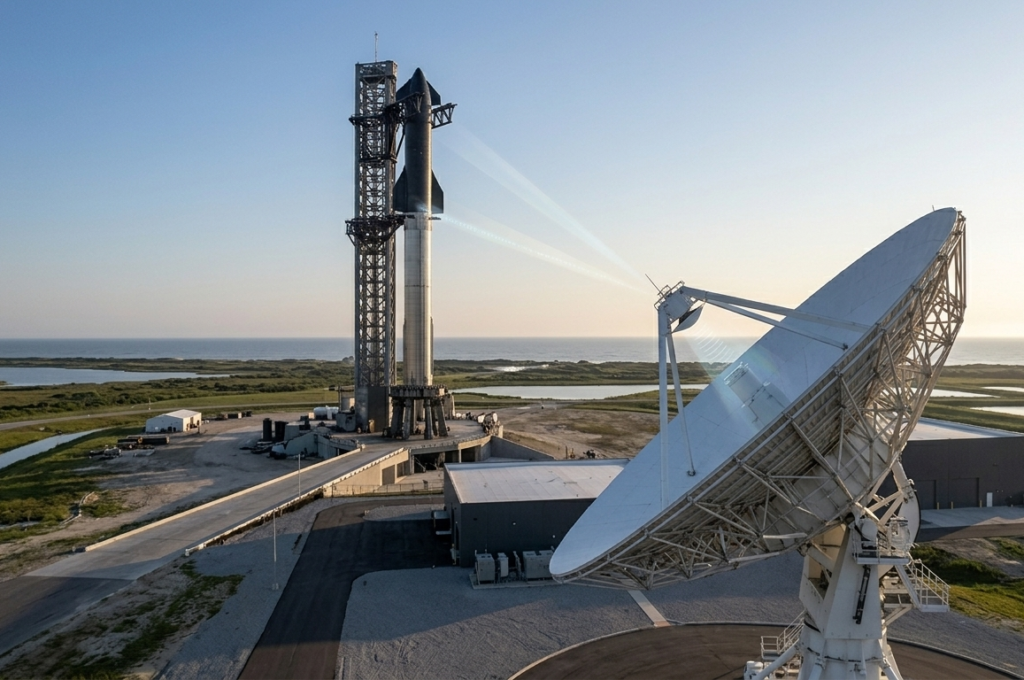
SpaceX’s Colossus data center complex represented exactly this category of extraordinary infrastructure. Originally conceptualized by Elon Musk as a “gigafactory of compute,” the facility had been developed primarily to support Grok, Musk’s artificial intelligence assistant positioned as a competitor to OpenAI’s ChatGPT and other consumer-facing artificial intelligence applications. The infrastructure that had been built to support internal artificial intelligence development now possessed enormous excess capacity relative to Grok’s operational requirements. Rather than allowing this expensive infrastructure to operate substantially below capacity utilization, SpaceX had determined to monetize the excess capacity by offering access to external customers. This represented a strategic recognition that computing infrastructure, once constructed, represented a depreciating asset that should generate revenue rather than remain idle.
The monetization of Colossus through external customer agreements had occurred rapidly and at enormous scale. Anthropic, the artificial intelligence company founded by former members of OpenAI and now positioned as a principal competitor in the development of advanced language models, had negotiated access to approximately 220,000 Nvidia graphics processing units deployed across Colossus 1 with power capacity exceeding three hundred megawatts. Anthropic had committed to paying SpaceX $1.25 billion monthly through May 2029, representing a potential contract value exceeding $40 billion if fully executed through its completion date. Google, the technology giant and dominant search engine provider, had separately agreed to lease approximately 110,000 Nvidia graphic processing units and related components from SpaceX facilities, with payments of $920 million monthly from October 2026 through June 2029, representing potential total value exceeding $30 billion.
Against this landscape of extraordinary sums, the $6.3 billion Reflection AI contract represented another significant but proportionally smaller component of SpaceX’s emerging data center commerce business. Yet the Reflection agreement carried significance beyond its pure financial magnitude. Reflection AI represented a distinctive profile within SpaceX’s customer base. The company’s explicit positioning as an open-source artificial intelligence platform reflected a different strategic orientation than that of Anthropic or Google. Reflection was building artificial intelligence models explicitly designed for transparency, openness, and accessibility to governments and enterprises seeking alternatives to the proprietary artificial intelligence systems developed by dominant technology companies. This open-source positioning had gained traction particularly following international discussions about the risks associated with exclusive dependence on closed proprietary artificial intelligence models.
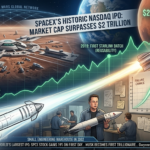
The timing of the SpaceX-Reflection agreement coincided with SpaceX’s transformative initial public offering in June 2026, which had represented the largest initial public offering in history, raising approximately $75 billion and generating a market capitalization exceeding $2 trillion. The public markets had provided SpaceX with direct access to capital markets and had established clearly defined ownership structures and financial transparency requirements. Within the context of this new public company status, the contracts for data center services represented important components of revenue diversification. Rather than relying exclusively on space launch services and satellite internet operations, SpaceX was establishing a significant new business line centered on providing artificial intelligence infrastructure services to major technology companies and specialized artificial intelligence developers.
The Reflection AI transaction illuminated important dimensions of how artificial intelligence development had become concentrated within the hands of infrastructure providers. Traditional narratives about artificial intelligence competition had emphasized differences in algorithmic innovation, talent acquisition, and research capability. Yet as the technology had matured and as frontier artificial intelligence systems had become increasingly dependent on computational capacity, the infrastructure dimension had assumed extraordinary importance. A company developing an exceptional artificial intelligence model possessed limited practical value without access to the computing capacity necessary to train that model and deploy it at scale. This dependency created structural advantages for companies that controlled physical infrastructure and could therefore control access to the computing capacity that made artificial intelligence development possible.
SpaceX’s position as an infrastructure provider with extraordinary capacity was historically distinctive. Most major technology companies had developed data center infrastructure primarily to support their own operations. Amazon Web Services, Google Cloud, and Microsoft Azure had accumulated data center capacity through decades of organic growth and had subsequently monetized excess capacity by offering cloud services to external customers. Yet Amazon, Google, and Microsoft had accumulated their infrastructure through continuous expansion driven by their own operational requirements. SpaceX had taken a different approach, deliberately constructing infrastructure at a scale substantially exceeding internal requirements and immediately seeking to monetize that excess capacity through customer contracts. This reflected a calculation that the capital expenditure required to construct such extraordinary infrastructure was justified only if the company could generate substantial external revenue from the capacity.
The strategic implications of SpaceX’s positioning as an artificial intelligence infrastructure provider extended well beyond the immediate financial returns from customer contracts. By controlling access to computing capacity, SpaceX acquired influence over which artificial intelligence projects could proceed and which remained resource-constrained. The company could theoretically favor certain customers over others, prioritize capacity allocation based on strategic considerations rather than purely commercial terms, or leverage its infrastructure position to influence the development directions of artificial intelligence companies dependent on SpaceX resources. The practical constraints on exercising such influence included the existence of alternative suppliers, the possibility of customers developing their own infrastructure, and the reputational damage that would accompany obvious favoritism. Nevertheless, the structural position of infrastructure providers in the artificial intelligence ecosystem meant that such companies possessed leverage that purely software-focused artificial intelligence developers could not match.
Reflection AI’s acceptance of SpaceX’s terms reflected the company’s assessment that access to computing capacity was sufficiently valuable that even substantial monthly payments were justified. Reflection, last valued at $25 billion through recent funding rounds, possessed substantial capital resources. Yet the company had determined that rather than investing those resources into constructing competing data center infrastructure, it was more efficient to contract with SpaceX for access to existing capacity. This calculation reflected the extraordinary barriers to constructing data center infrastructure from scratch. The capital requirements were enormous, the technical expertise required was specialized and difficult to acquire, the regulatory approvals for electricity consumption and environmental compliance were complex, and the construction timelines extended across multiple years. Given these obstacles, purchasing access to existing infrastructure through monthly payments represented a more practical approach than attempting to build competing infrastructure.
The broader artificial intelligence market was watching SpaceX’s infrastructure monetization strategy with close attention. The success of the Colossus platform in generating substantial contract revenue from major customers had demonstrated that data center infrastructure represented a valuable business. Other potential infrastructure providers, including cryptocurrency mining companies with excess capacity and established data center operators, were evaluating their own capacity to enter the artificial intelligence infrastructure market. The extraordinarily high monthly payments that customers were agreeing to—ranging from $150 million for Reflection to $920 million for Google—suggested that customers assessed the value of access sufficiently highly to justify even substantial costs.
The long-term implications of the SpaceX-Reflection arrangement and the broader pattern of computing infrastructure commercialization extended into fundamental questions about artificial intelligence development and deployment. If computing capacity remained concentrated among a small number of infrastructure providers, those providers would exercise substantial leverage over which artificial intelligence development projects could proceed. This could have consequences for artificial intelligence diversity, for the possibility of alternative approaches to artificial intelligence development and governance, and for the ability of organizations outside the favored customer base to participate meaningfully in artificial intelligence development. Alternatively, if computing capacity eventually became more abundant and less concentrated, the leverage of infrastructure providers would diminish and the competitive landscape would become more democratic.
The specific appeal of Reflection AI as a customer reflected the growing recognition that open-source artificial intelligence offered strategic value distinct from proprietary systems. Governments and enterprises were evaluating open-source alternatives precisely because those systems could be understood, modified, and deployed according to local requirements rather than according to the preferences of the organizations that had developed proprietary systems. SpaceX’s willingness to provide infrastructure to support Reflection’s open-source development suggested that the company was not attempting to favor proprietary approaches but was instead following a purely commercial logic: providing capacity to customers who could pay the required fees, regardless of the philosophical or strategic orientation of their artificial intelligence development.
SOURCES AND REFERENCES
- CNBC – “SpaceX Signs Computing Power Deal With Open-Source AI Startup Reflection Worth Up To $6.3 Billion” (June 22, 2026)
- OODAloop – “SpaceX signs computing power deal with open-source AI startup Reflection worth up to $6.3 billion” (June 22, 2026)
- Seeking Alpha – “SpaceX lands another cloud computing deal as Reflection signs up for potential $6.3B contract” (June 22, 2026)
- Stocktwits – “SPCX On Track For Worst Day Since Nasdaq Debut — SpaceX Reportedly Lands $6.3B Reflection AI Deal” (June 22, 2026)
- Mexico Business News – “SpaceX Signs US$6.3 Billion Deal With Reflection AI” (June 22, 2026)
- TradingView News – SpaceX announcements and regulatory filings
- SpaceX Official Communications and Investor Relations
This analysis is based on publicly available reporting, regulatory filings, and company communications as documented on June 22, 2026. The assessment reflects the state of the artificial intelligence infrastructure market as of mid-2026 and recognizes that competitive dynamics and infrastructure availability will continue to evolve. This article is written for informational and analytical purposes to enhance understanding of artificial intelligence industry dynamics and infrastructure markets rather than to provide investment advice or recommend specific commercial strategies.